Friday, July 18, 2025

Going to a Illness Specific Multispecialty Clinic - like Cacna1a or others? Here are pro-tips to make optimize the visit.

 Going to a Illness Specific Multispecialty Clinic - like Cacna1a or others? 

Here are pro-tips to make the time valuable.

Feedback is always welcome in comments!

JR


Step Zero: Prepare
  • Make a binder with different sections (specialist consultations for each problem, imaging, eeg, sleep studies, school and neuro-psychtesting)
  • Look for what other specialists are at that institution who might be helpful. 
  • Plan to do a few fun things if you can.
What to prepare - 

General Neurology / Genetics

  • Full genetic testing reports (include any re‑interpretation letters).

  • Family history notes (migraines, ataxia, seizures, behavioral issues).

  • Prior neurology consults or clinic notes.

Epilepsy Team

  • EEG reports (routine, prolonged, video EEG). Bring CDs/USB if possible.

  • Seizure history:
    • Age of onset, type (describe what happens), frequency, duration, triggers.
    • Current rescue plan (e.g., diazepam, midazolam).
    • Medication history: all antiseizure drugs tried, doses, side effects, why stopped.

  • Seizure diaries (even handwritten or phone app screenshots).

Movement Disorders Team

  • Notes from PT/OT or previous movement evaluations.

  • Videos of episodes: dystonia, tremor, ataxia, gait problems.

  • Details on triggers (illness, fatigue, certain activities).

  • Adaptive equipment or orthotics used.

  • Response to meds like acetazolamide or 4‑aminopyridine (if tried).

Behavioral Neurology / Neurodevelopment

  • Neuropsychological evaluations (attention, memory, executive function).

  • School reports/IEP or therapist notes (speech, occupational therapy, behavioral plans).

  • Notes on mood, sleep, anxiety, irritability, sensory issues.

  • History of behavioral interventions tried and results.

✅ Ophthalmology, GYN issues, Physiatry (teens should have bone labs)

Imaging and Other Studies

  • Brain MRI (with radiology report) on CD/USB.

  • Any other scans (CT, PET, etc.).

  • Relevant labs (metabolic panels, vitamin levels, etc.). 

  • Taking acetazolamide - monitoring labs


🧭 2. The Summary Sheet 

Bring a one‑page overview for quick reference:

  • Child’s name, age, primary diagnosis (CACNA1A mutation details).

  • Key symptoms (ataxia, seizures, behavior concerns).

  • Key events

  • Current medications and doses.

  • Current supplements

  • Most important questions/concerns for this visit.

  • Multiple copies!


🎥 3. Capture Episodes - Video the sweet and the sour.

  • Specialists appreciate short videos to see subtle or uncommon phenomena:
  • Record seizures, migraine auras, unusual movements, tremors, or gait difficulties. Note time of day and what was happening before the episode (trigger context).

  • Our kids do the unexpected. Bring videos of the great things they do. Neurologists often have this idea that a tired, scared child will offer the information they need for exam.


4. Questions to Ask Each Specialty

Movement Disorders

  • Are there medications or therapies that could improve ataxia/dystonia?

  • Should we consider 4‑aminopyridine, acetazolamide, or other channel therapies?

  • AQNeursa

  • Are there adaptive devices that could help (walkers, orthotics)?

Epilepsy

  • Do you recommend any medication adjustments or further monitoring?

  • Is epilepsy surgery, VNS, or ketogenic diet ever considered in CACNA1A cases?

  • What rescue plan do you recommend for prolonged events?

Behavioral Neurology

  • What strategies help with executive dysfunction, attention, or mood?

  • Are there specific behavioral therapies or medications that work best in CACNA1A?

  • Are there known links between CACNA1A and autism spectrum or ADHD‑like traits?

  • What is the Cerebellar Cognitive Affective syndrome.

  • What school recommendations / accommodations do you recommend.

Multidisciplinary / Big‑Picture

  • Are there clinical trials or registries we should join?

  • What screening or surveillance should we do annually?

  • How do we best coordinate care between home neurologist and the " team" ?


🧰 5. Practical Items to Bring

  • All current medications (or a photo of labels).

  • Fun or distracting items (headphones, favorite toy, snacks).

  • Mobility aids (stroller, wheelchair) if needed.

  • Charging cables / batteries for devices.

  • Insurance cards and referral/preauth paperwork.


💡 6. Pro Tips

  • Take notes use voice to text apps or bring someone to help document what each specialist says.

  • Ask for a written care plan or summary at the end of the visit.

  • If possible, send records to the clinic ahead of time (they often have a secure upload link) so specialists can review before you arrive.

  • Scan all your originals. 

  • Have reasonable expectations. You are human beings and you likely have a lot of information for them to take in. Plan a zoom followup. 

    Here is a form that you can copy and customize

Monday, March 03, 2025

Evidence-Based Guidelines and Secondary Meta-Analysis for the Use of Transcranial Direct Current Stimulation in Neurological and Psychiatric Disorders

 Evidence-Based Guidelines and Secondary Meta-Analysis for the Use of Transcranial Direct Current Stimulation in Neurological and Psychiatric Disorders

Abstract

Background

Transcranial direct current stimulation has shown promising clinical results, leading to increased demand for an evidence-based review on its clinical effects.

Objective

We convened a team of transcranial direct current stimulation experts to conduct a systematic review of clinical trials with more than 1 session of stimulation testing: pain, Parkinson’s disease motor function and cognition, stroke motor function and language, epilepsy, major depressive disorder, obsessive compulsive disorder, Tourette syndrome, schizophrenia, and drug addiction.

Methods

Experts were asked to conduct this systematic review according to the search methodology from PRISMA guidelines. Recommendations on efficacy were categorized into Levels A (definitely effective), B (probably effective), C (possibly effective), or no recommendation. We assessed risk of bias for all included studies to confirm whether results were driven by potentially biased studies.

Results

Although most of the clinical trials have been designed as proof-of-concept trials, some of the indications analyzed in this review can be considered as definitely effective (Level A), such as depression, and probably effective (Level B), such as neuropathic pain, fibromyalgia, migraine, post-operative patient-controlled analgesia and pain, Parkinson’s disease (motor and cognition), stroke (motor), epilepsy, schizophrenia, and alcohol addiction. Assessment of bias showed that most of the studies had low risk of biases, and sensitivity analysis for bias did not change these results. Effect sizes vary from 0.01 to 0.70 and were significant in about 8 conditions, with the largest effect size being in postoperative acute pain and smaller in stroke motor recovery (nonsignificant when combined with robotic therapy).

Conclusion

All recommendations listed here are based on current published PubMed-indexed data. Despite high levels of evidence in some conditions, it must be underscored that effect sizes and duration of effects are often limited; thus, real clinical impact needs to be further determined with different study designs.

Full article here


Sunday, February 23, 2025

What is Transcranial Direct Current Stimulation


The basics of transcranial Direct Current Stimulation (tDCS):

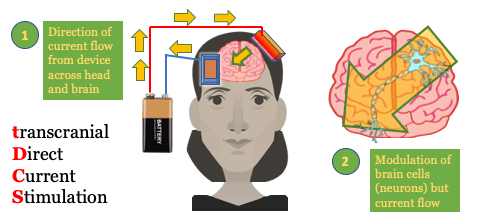
Transcranial Direct-Current Stimulation (tDCS) is a portable, wearable brain stimulation technique that delivers a low electric current to the scalp. A fixed current between 1 and 2 mA is typically applied1. tDCS works by applying a positive (anodal) or negative (cathodal) current via electrodes to an area. tDCS is a neuromodulation technique that produces immediate and lasting changes in brain function. The position of the anode and cathode electrodes on the head is used to set how current flows to specific brain regions. The current delivered by tDCS is NOT strong enough to trigger an action potential in a neuron; instead its “sub-threshold” ..... 

MORE HERE

Thursday, February 20, 2025

"tACDC" - Blended Transcranial Electrical Stimulation for Childhood Autism & ADHD : Evaluation of Procedural Feasibility


"tACDC" - Blended Transcranial Electrical Stimulation 
for Childhood Autism & ADHD : Evaluation of Procedural Feasibility"

Poster presentation at the International Brain Stimulation Conference 2025
Kobe, Japan

Alexandria Elkhadem - 1; Joshua Rotenberg, MD - 1
1-Houston Specialty Clinic


Wednesday, December 04, 2024

TDCS for Depression - Better than sham

Efficacy and acceptability of transcranial direct current stimulation (tDCS) for major depressive disorder: An individual patient data meta-analysis


More literature HERE

https://www.ncbi.nlm.nih.gov/sites/myncbi/103bGJGeIgzQv/collections/59242511/public/

Friday, May 17, 2024

Transcranial Electrical Stimulation (tES) using TDCS for ADHD and Autism

We are excited to introduce a new complementary treatment option available at our clinic, Transcranial Electrical Stimulation (tES).

 TES using direct current stimulation (TDCS) has shown promising results for individuals with Autism Spectrum Disorder (ASD) and Attention Deficit Hyperactivity Disorder (ADHD).

Neurodevelopmental autism adhd dyslexia brain injury therpay

Transcranial Electrical Stimulation is a non-invasive procedure that involves the application of a low-intensity electrical current to the scalp. This current is thought to influence brain activity and has been studied for its potential benefits in various neurological and psychiatric conditions.

For individuals with ASD, tES has been explored as a way to enhance cognitive abilities and address core pathologies of autism. Studies have suggested that tES could improve mini-columnar morphology and gamma oscillations in the brain, which are areas that can be atypical in individuals with ASD 1.

In the case of ADHD, tES, particularly transcranial direct current stimulation (tDCS) of the dorsolateral prefrontal cortex, has been investigated for its ability to improve cognitive control and impulse regulation. This could lead to significant improvements in cognition and impulse control for those with ADHD 2.

It’s important to note that while tES has very few potential side effects, it is an emerging therapeutic tool. It is still considered complementary for ASD and ADHD, meaning it is not meant to replace standard treatments. 

Does tES hurt? In studies, subjects rated the discomfort as between watching TV and going to the dentist.

Our clinic is committed to providing the latest and most effective treatments, and the data indicates that tES offers a new avenue for improving the quality of life for our patients with ASD and ADHD.

If you or a loved one are interested in exploring this treatment option, we invite you to schedule a consultation. 


Who is not a candidate? 
  • Consider if they can sit still and tolerate mild discomfort for 30 minutes? If not, this treatment may not be the right fit. 
  • Skull defects and transcranial metal surgical implants may preclude this treatment. 

During this consultation, we will discuss the potential benefits, the procedure, and any questions you may have.

Your health and well-being are our top priority, and we are here to support you.

To learn more check our website link here. Please do not hesitate to reach out to us for more information or to arrange an appointment.

Ask about other uses:
  • Traumatic brain injury
  • Stroke
  • Multiple sclerosis
  • Movement disorders
  • Memory difficulties
  • Headaches
  • Major depressive disorder
  • Schizophrenia
  • Craving in substance use disorders
  • Obsessive-compulsive disorder
  • Mild cognitive impairment


New Home Sleep Apnea test for Children and Adults

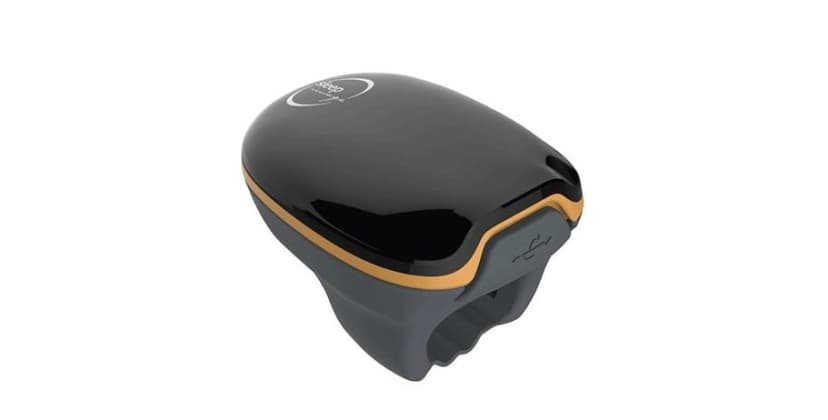
 What is the SleepImage Ring (SIR) ? 


The SIR is a simple, comfortable device that adult and pediatric patients can wear on their finger overnight. It has been cleared by the FDA for the diagnosis and management of sleep-disordered breathing, including obstructive sleep apnea (OSA) and central sleep apnea (CSA).


Here are some of the key benefits of this testing :

Ease of Use: The ring is designed to be worn on any finger, ensuring a snug fit without discomfort. This user-friendly approach allows for a more natural sleep study experience 1.

Comprehensive Data Collection: During sleep, the ring streams raw physiological data to a mobile app, which then uploads the data for analysis. This process provides extensive data that is interpreted by our specialists 1.

FDA-Cleared for Children and Adults: The SleepImage system is suitable for use in children over the age of 2 and adults 1.

In-Home Convenience: Patients to conduct sleep studies in their natural sleeping environment,  reducing the likelihood of an overnight stay in a sleep clinic. By reducing the stress associated with traditional sleep studies, more patients can be screened 2.

Tracking Treatment Progress: The SIR helps in monitoring the effectiveness of treatments 3.

Cost-Effective: With the SIR, we offer patients a cost-effective alternative to traditional polysomnography4.
Home sleep test children adults